Opal guide
Opal Cabochon Buying Basics
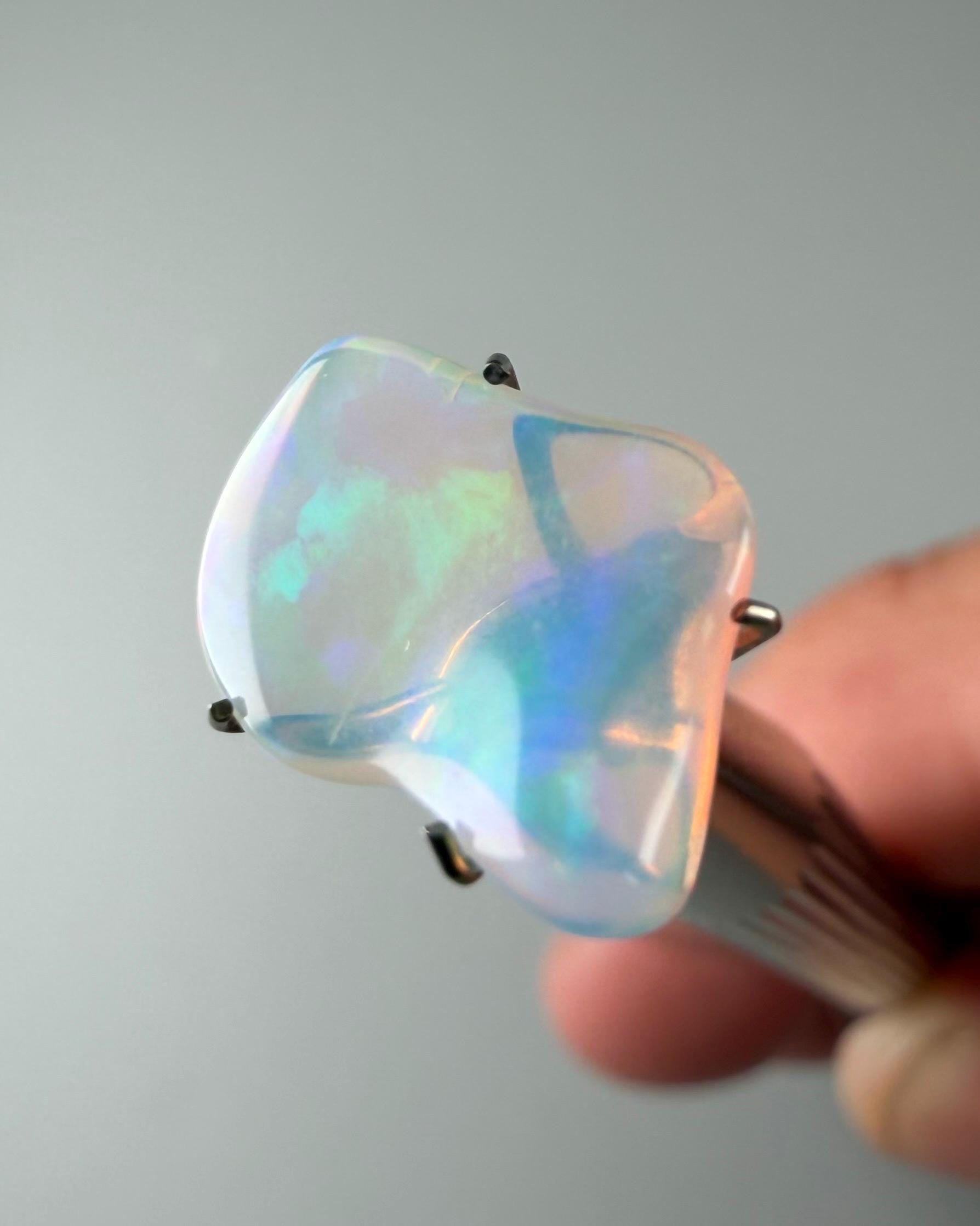
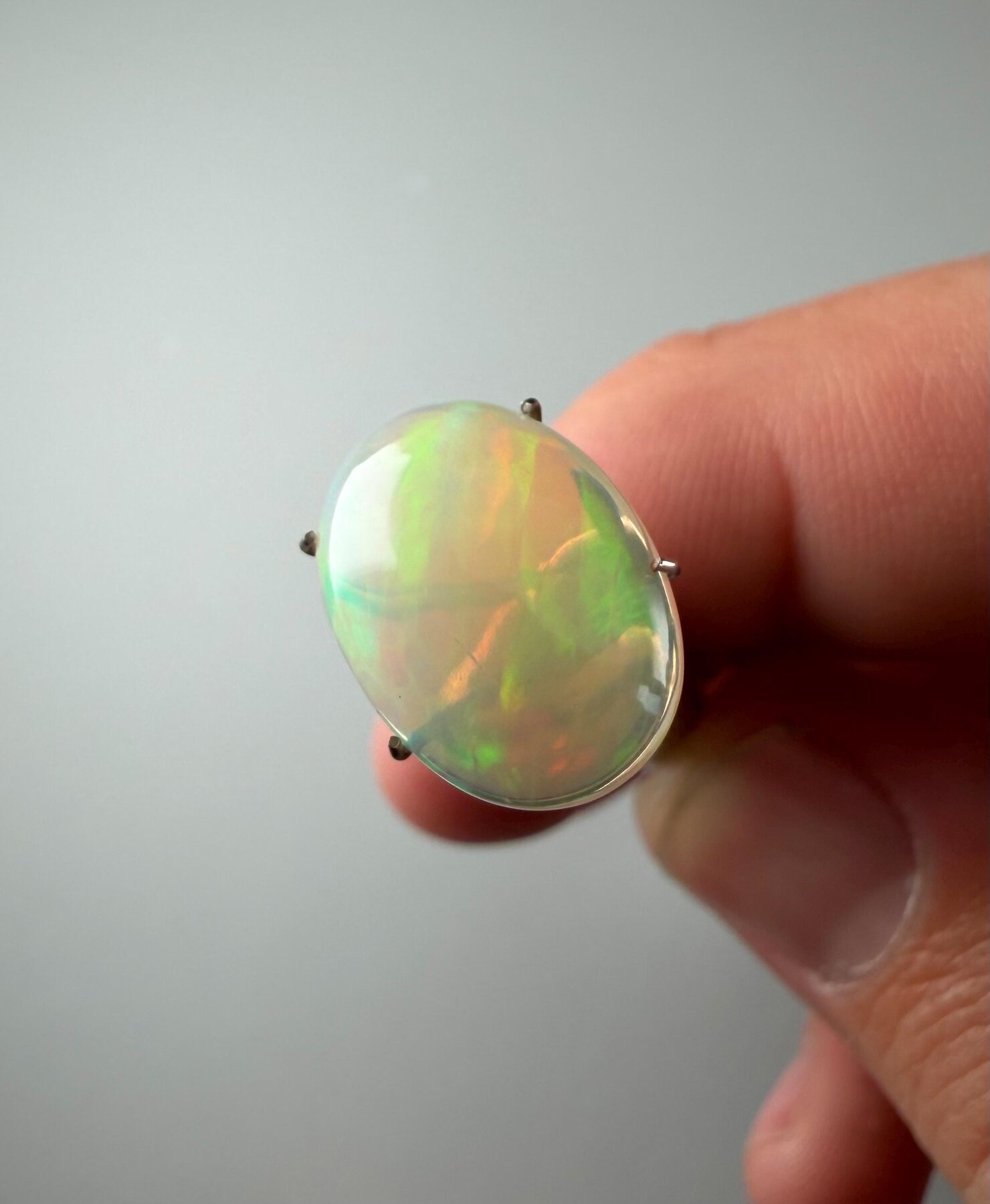
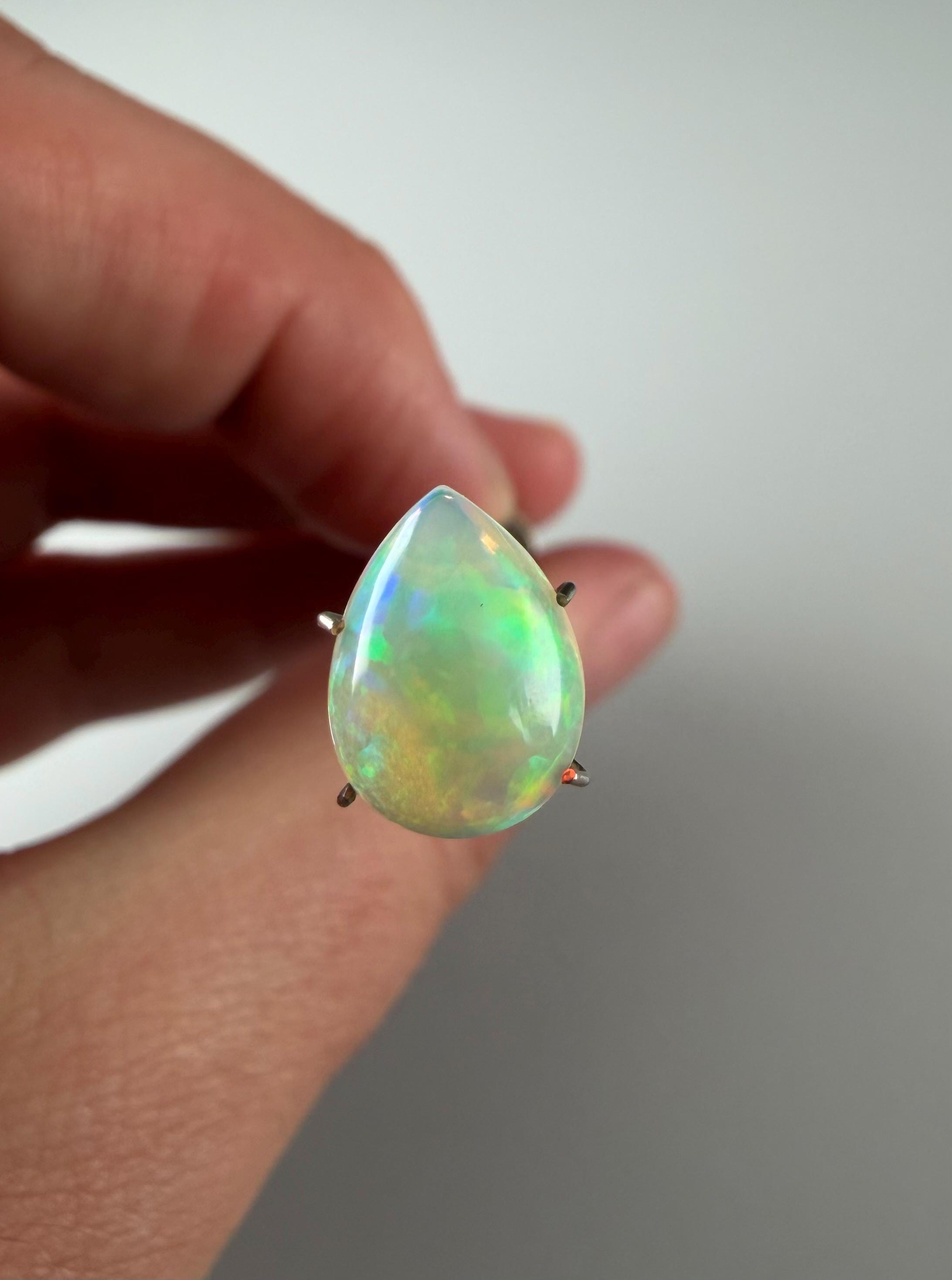
Opal changes more with angle and lighting than many other gemstones. A good online listing should help you judge the exact stone across several views rather than reducing it to one bright frame.
5 minute guide · Updated August 24, 2026
Play-of-color is an angle-dependent effect
Play-of-color describes shifting spectral colors produced as the opal moves relative to the viewer and light. Note which colors appear, how much of the face shows color, and whether the effect is broad, pinfire-like, directional, or concentrated in one area.
A still photograph captures only one combination of angle, light, camera, and display. Multiple images or video provide better context, but no screen can promise an identical appearance under every real-world light source.
Compare body appearance, pattern, and clarity
The background or body appearance affects how strongly the play-of-color reads. Transparency can range from opaque to transparent, and inclusions or internal features may change both appearance and durability.
GIA groups opal quality around color, pattern, and clarity, while emphasizing play-of-color as the most important quality factor. Personal preference still matters: a delicate directional flash and a face full of broad color are different looks, not interchangeable grades.
Read the cut, weight, and dimensions
Cabochons generally have a polished, rounded top rather than a field of flat facets. Dome height, outline, and face-up dimensions affect how the stone looks and how it might fit a future design.
Use carat weight and millimeter dimensions together. If you are considering a ring, pendant, wire wrap, or custom setting, an experienced maker should evaluate the exact stone and measurements before fabrication.
Check treatment, origin, and care information
Ethiopian or Welo origin and treatment status should be tied to the evidence available for the individual stone. Supplier information is not the same as an independent laboratory conclusion, and the listing should say which kind of information it is providing.
Opal contains water and can be sensitive to extreme heat, dryness, and impact. Care depends on the material and any treatment or assembly, so confirm those details before cleaning, setting, or exposing the stone to changing conditions.
- Several viewing angles
- Carat weight and millimeter dimensions
- Origin and treatment basis
- Surface and internal condition
- Exact-stone selection method
Primary references
Apply the guide